Kentima: 12 attempts to control a weeping surface
2026
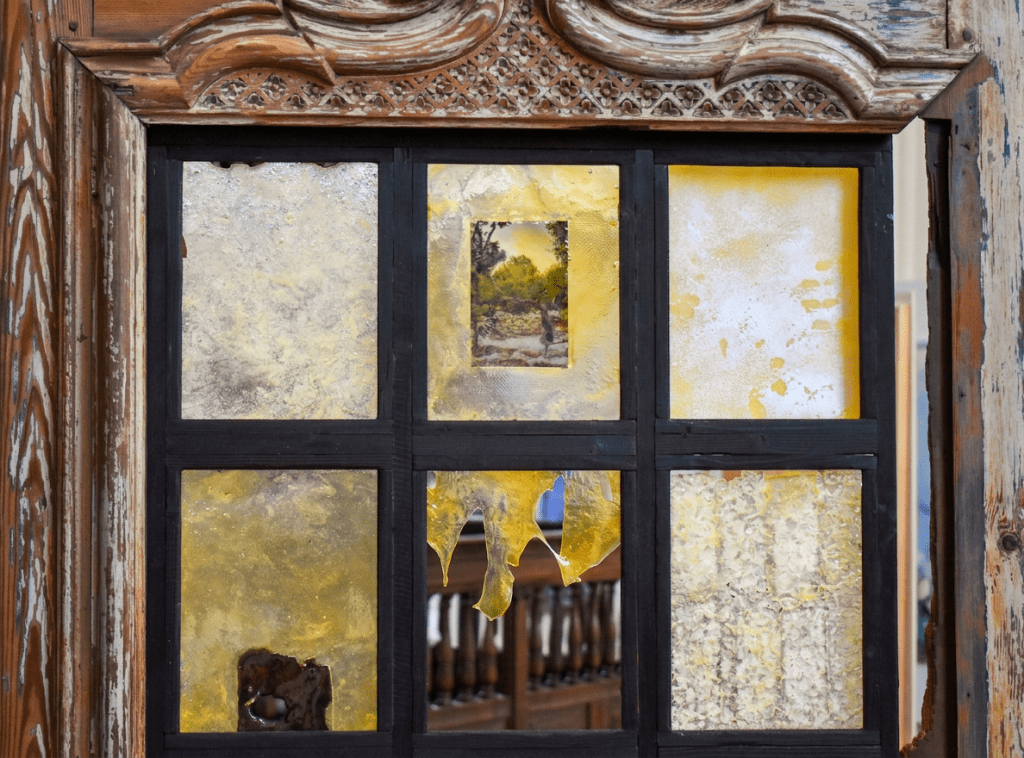
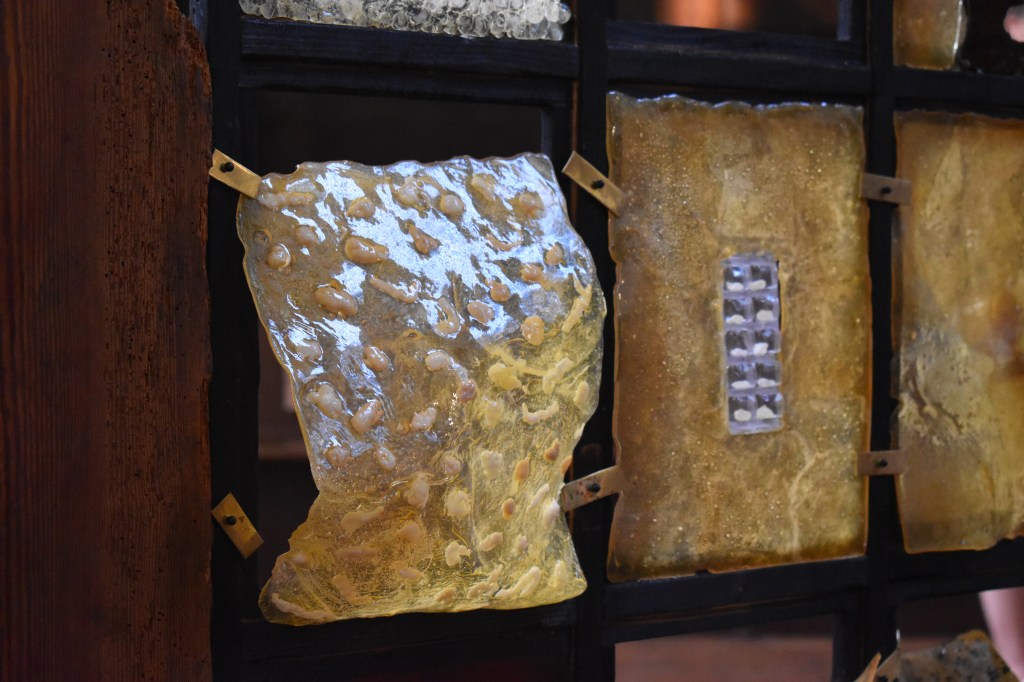
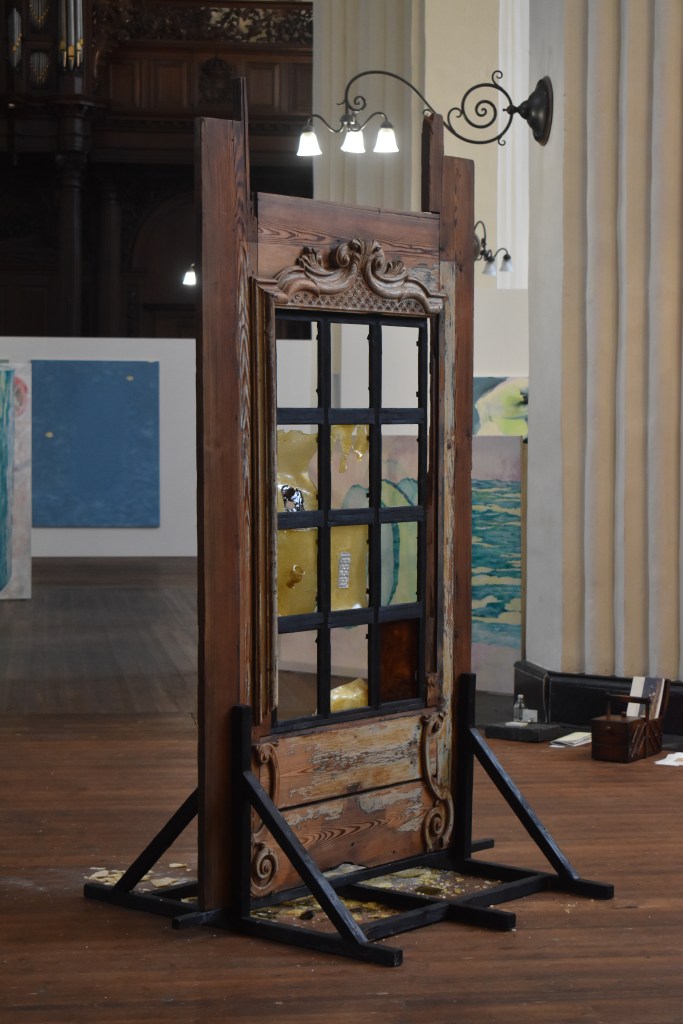
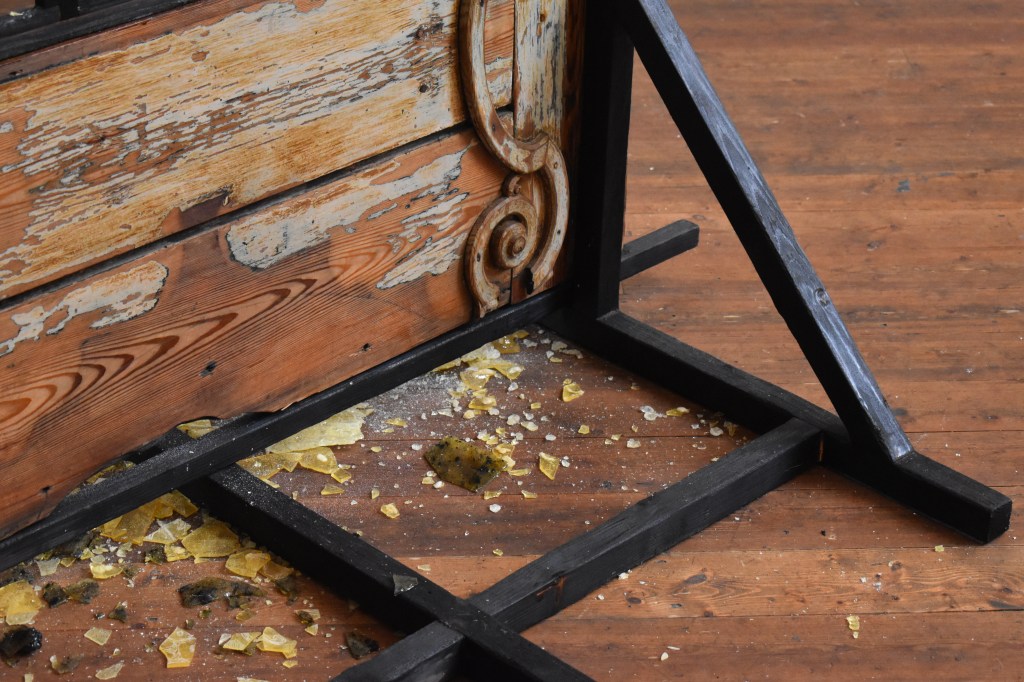
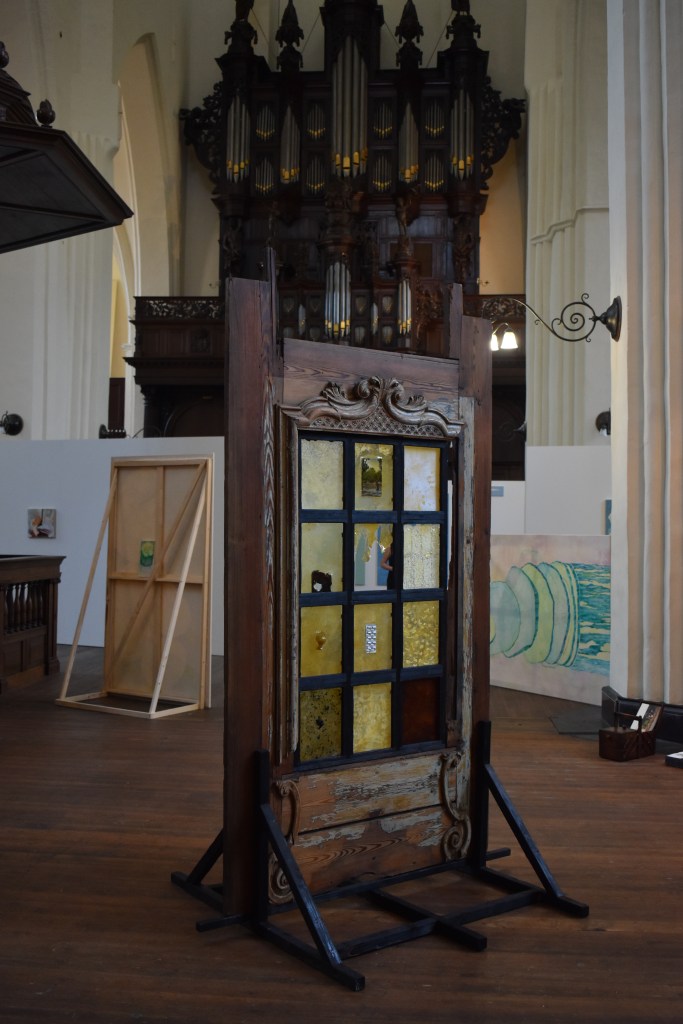
19th century door frame, mastic resin, burnt pine wood, brass
h: 250cm X w: 125cm
Graduation Work / Frank Mohr Institute / June 2026 / Groningen
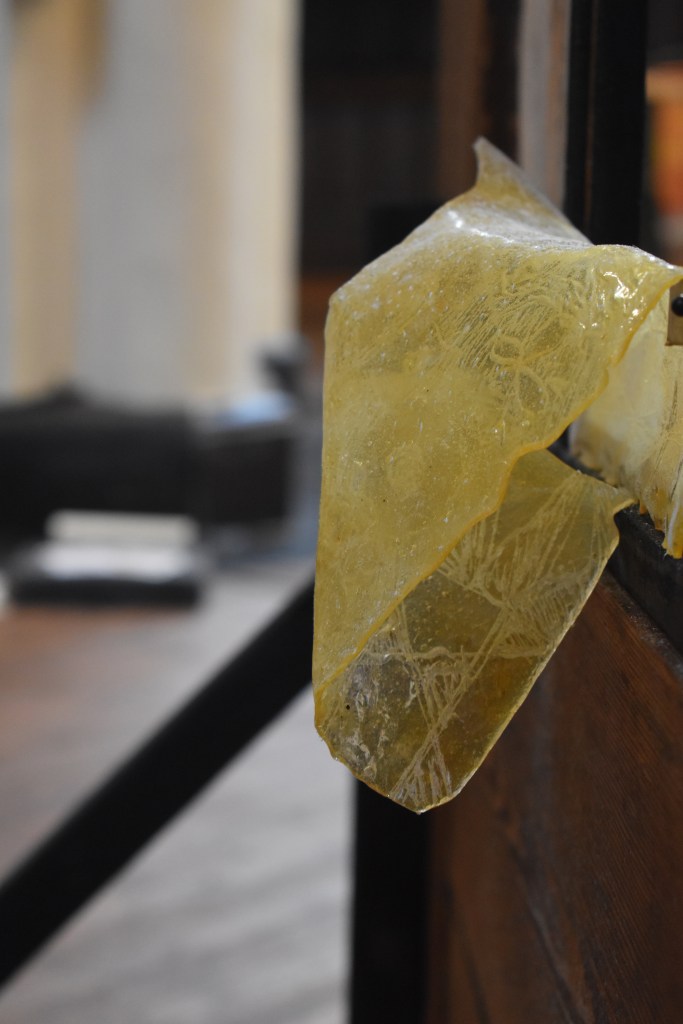
Kentima is a door, a hard frame imposing order on twelve deforming, soft surfaces cast from mastiha resin. The tension is the work: rigid architecture attempting to contain a material that refuses containment, that melts, shifts, and weeps according to its own qualities. Like the windows of a church, each panel holds its own story. Together, all twelve form a single narrative.
The vocabulary is drawn from the the material’s biography, organised into four rows of three panels each.
Genesis. The first row asks what precedes physical existence. Does a material have a life before its birth? Where does origin begin? With the tree, or further back, in the same crop that once expelled Adam and Eve from paradise?
Praxis. The second row turns to the act. What does making reveal about the maker? Is every praxis irreversible? At what point do we reach greed?
Chrisis. In Greek meaning: the way we use or value. What is the worth of a gift? How do values shift across centuries and hands? Who has access to what is considered precious, and where does the golden mean lie between use and exploitation?
Katharsis. The final row confronts what the whole work has been circling: death, time, and the desire for permanence. The melting surfaces perform the answer. Time is not linear but subjective, responsive, alive. Immortality, this work proposes, is not the absence of death. It is the refusal to remain silent in the face of it.
Kentima takes its name from the ancient technique of scoring the tree to release its resin. A wound that is also a beginning. The door becomes a portal, the panels become confession, and the material, in its slow transformation, becomes the only honest narrator.